
Author: Dimitris Christodoulou, Senior Industrial Engineer / FedEx Express Greece
Cooperation between courier companies has always been a useful tool to widen the reach of a courier company. Such collaborations often take place in remote areas where not all companies have established their networks. However, establishing such a collaboration between two of the most renowned courier companies in Greece, in the city center of Athens, is a completely different story.
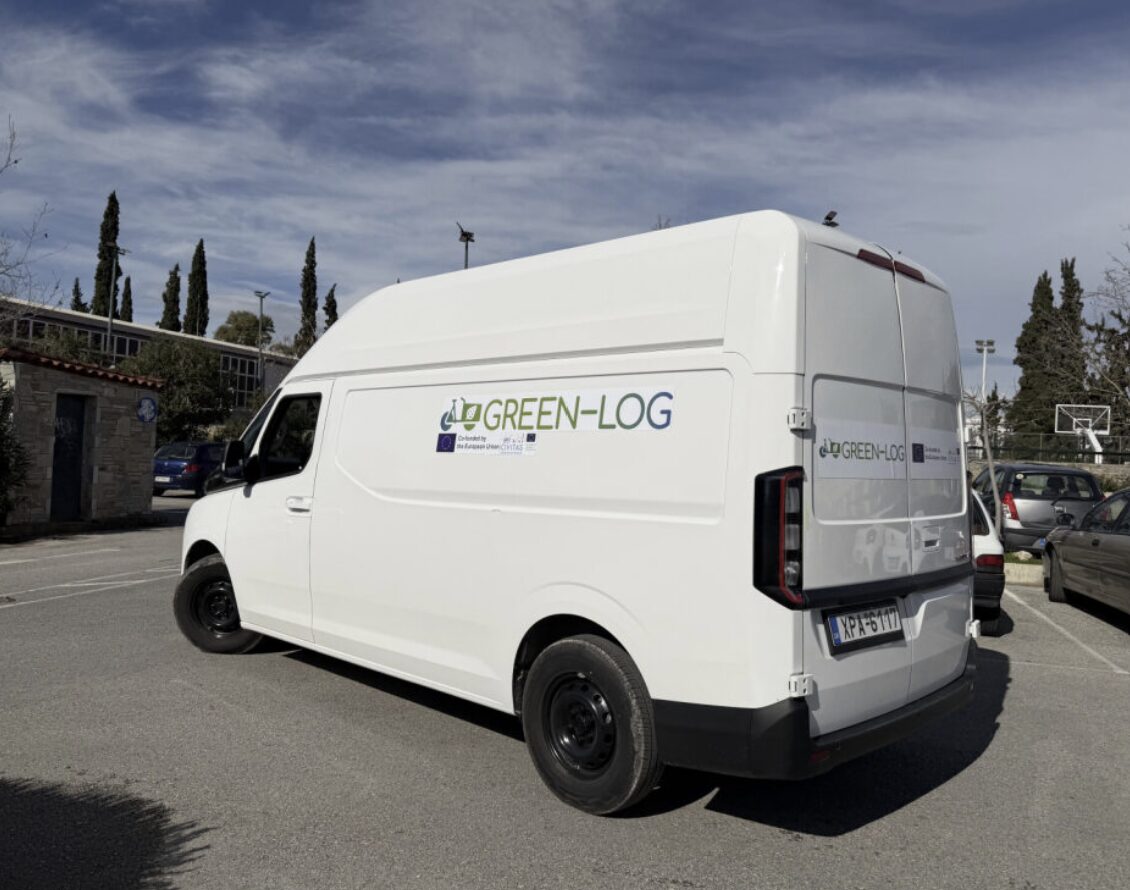
Within the framework of the Athens Living Lab, we succeeded in doing so. The core idea of the Living Lab was to reduce the number of courier vans operating in the city center of Athens by merging the delivery and pickup volumes of two logistics service providers (LSPs). In our scenario, FedEx and ACS brought their delivery volumes to a micro‑consolidation center provided by the Municipality of Athens, and a third‑party courier delivered all parcels using a shared vehicle.
This approach has resulted in significant reductions in travel time and distance, as well as in the number of delivery stops, compared to the two companies operating independently with their own resources.
The challenges encountered during the pilot are outlined below:
Data exchange constraints
From a commercial perspective, data and information are valuable assets. However, when it comes to sensitive customer data, company compliance may be at risk. The main challenge in this pilot was the exchange of information between two companies that are semi‑competitors.
To address this issue, the Athens University of Economics and Business (AUEB) acted as an intermediary between FedEx and ACS. AUEB collected data from both companies, processed it, and provided optimized routes for the GREEN‑LOG vehicle. FedEx and ACS signed separate NDAs with AUEB, ensuring that no sensitive information was shared between the two courier companies.
Branding
Branding is not only reflected in the logo displayed on a courier van, but also in the people delivering the service and the visual identity they represent, such as uniforms. In highly visible areas like the city center of Athens, companies are understandably reluctant to dilute their brand presence. It would not be acceptable for either company to have its delivery volume handled by the couriers of another.
To address this challenge, a neutral third‑party courier provider was engaged to carry out the joint deliveries, using a white‑label van for daily operations. In the second demonstration, the van was branded with the GREEN‑LOG logo and the European Commission emblem.
Operational constraints
Live updates are highly important when it comes to tracking a package. Both customers and companies need to be instantly informed when the status of a package changes (e.g. in transit, delivered, failed delivery, etc.).
In the Athens Living Lab, the Bring Your Own Device (BYOD) application was used for scanning activities. The scans were then uploaded and stored in the Digital Control Tower (DCT), enabling real‑time tracking and monitoring of deliveries.
To summarise, significant challenges were encountered in establishing collaboration between FedEx and ACS in a high‑profile area such as the city center of Athens. These challenges were ultimately overcome thanks to the creativity, mutual trust, and willingness to collaborate fostered within the Athens Living Lab.
The lessons learned from this process provide valuable insights and practical guidance for future collaborative urban logistics initiatives, demonstrating that with the right approach, innovative solutions can be successfully implemented even in the most complex urban environments.
Title photo: GREEN LOG Shared Van in Athens