
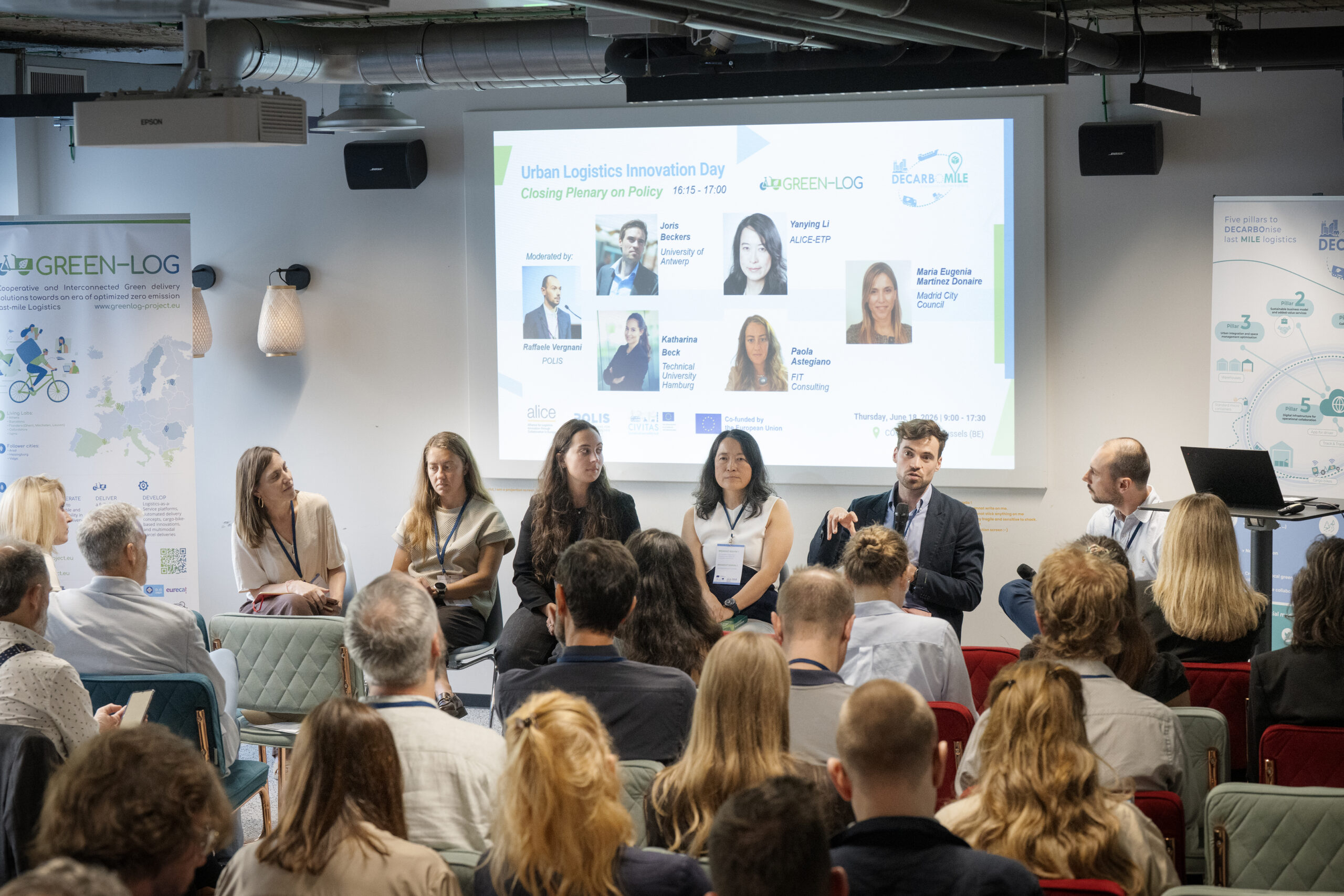
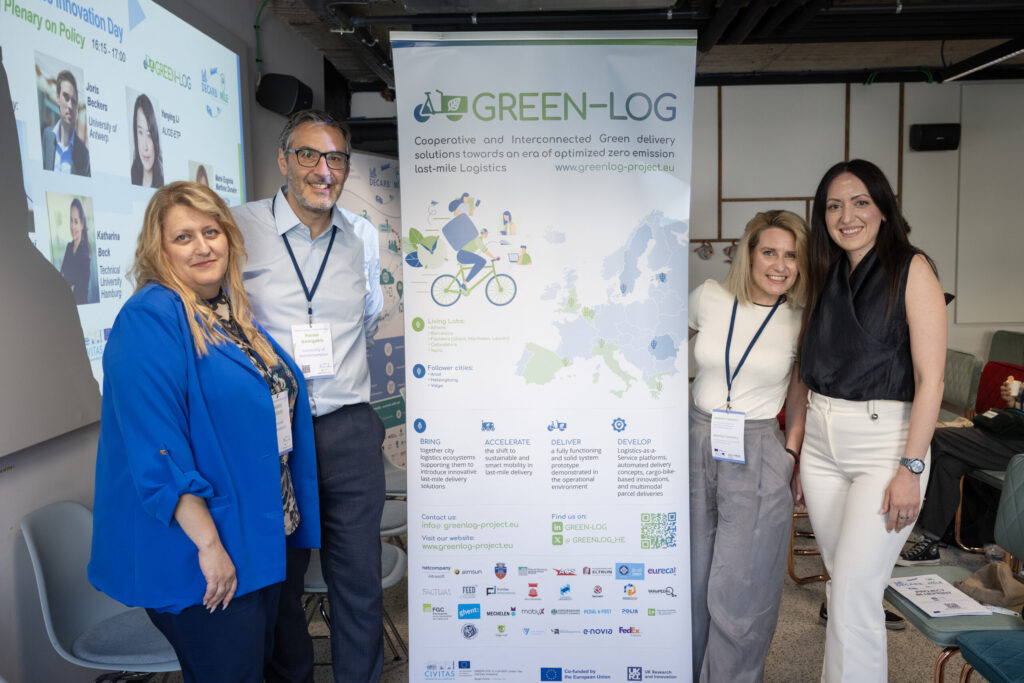
On 18 June 2026, more than 100 urban logistics practitioners, policymakers, researchers, industry representatives and European Commission stakeholders gathered in Brussels for the 4th Urban Logistics Innovation Day, which also served as the Final Event of the GREEN-LOG and DECARBOMILE projects. Co-organised by GREEN-LOG, DECARBOMILE, POLIS Network and ALICE ETP, the event provided a valuable opportunity to share project results, lessons learnt and future recommendations after several years of research, innovation and real-life demonstrations across Europe.
The event was opened by Yannick Bousse, Project Officer at CINEA, together with Amalia Ntemou from the GREEN-LOG coordination team (Netcompany) and Pauline Buosi from DECARBOMILE. During the keynote session, Johan Leveque (ALICE ETP) and Paola Chiarini (EC DG MOVE) highlighted the importance of collaboration, innovation and effective policy frameworks to accelerate the transition towards more sustainable urban logistics systems.
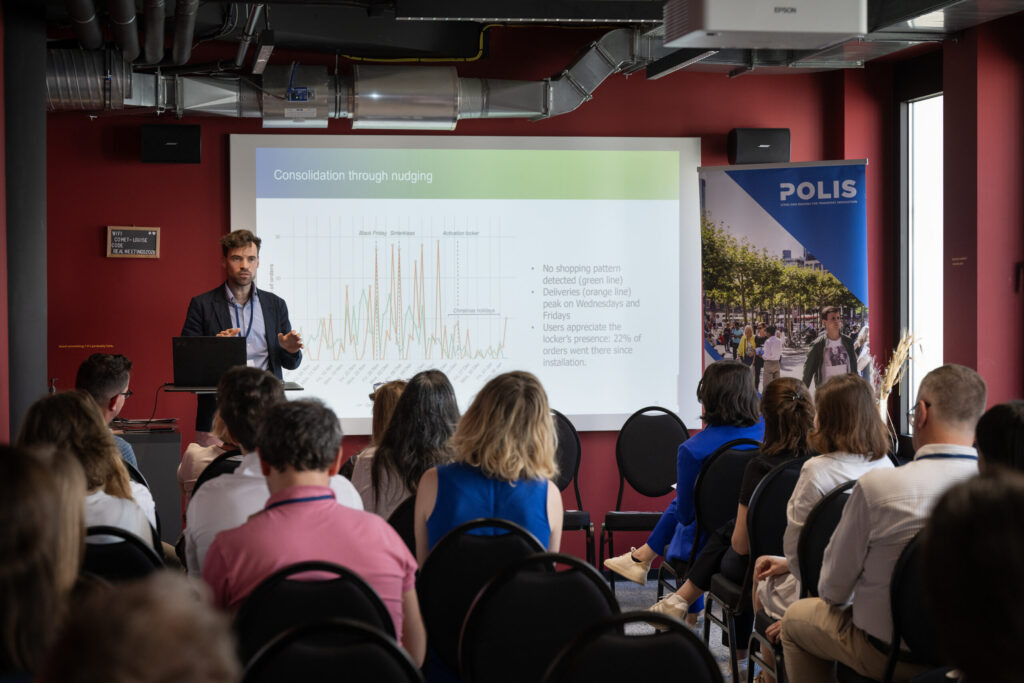
Throughout the day, GREEN-LOG partners presented key project results and experiences from their Living Labs and digital innovations. Project representatives showcased solutions including the Last-Mile Digital Control Tower, the Augmented Intelligence Modelling Platform and the Logistics-as-a-Service Marketplace, while pilot cities and regions shared experiences from Flanders, Athens, Oxfordshire, Ispra and Barcelona. Discussions also explored GREEN-LOG’s transferability outcomes, demonstrating how the project’s solutions can support cities and logistics operators across Europe.
The programme addressed some of the most pressing challenges in urban freight, including trusted data sharing, digital tool integration, consumer behaviour, real-time planning tools, flexible use of urban space, shared infrastructure, scalability and replication of innovations, and supportive governance frameworks. The event also benefited from contributions from fellow CIVITAS Initiative projects, including DISCO, GreenTurn and CODE ZERO, enriching the exchange of knowledge and experiences across the European urban mobility and logistics community.
A recurring message throughout the discussions was that many of the technologies and solutions required to improve urban logistics already exist. The challenge now lies in scaling them up, developing viable business models, strengthening collaboration among stakeholders and ensuring that urban logistics is better integrated into city planning and mobility strategies.
From Lessons Learnt to Policy Recommendations
The event concluded with a policy-focused plenary session, where GREEN-LOG policy recommendations were presented by Joris Beckers (University of Antwerp) alongside perspectives from DECARBOMILE, ALICE ETP, public authorities and industry experts. Drawing on the experiences gained through the projects’ pilots and demonstrations, speakers highlighted the need for supportive policy frameworks, stronger public-private collaboration, trusted data sharing mechanisms and continued investment in innovative urban logistics solutions.
Participants agreed that achieving large-scale decarbonisation of urban freight transport will require coordinated action from cities, logistics operators, technology providers, researchers and policymakers. Replication, scalability and long-term business viability emerged as key priorities for future initiatives.
Looking Ahead
As both GREEN-LOG and DECARBOMILE reach the end of their journeys, the Urban Logistics Innovation Day served not only as a celebration of their achievements but also as a call to continue building on the knowledge generated through their pilots, demonstrations and stakeholder engagement activities.
The lively discussions, strong participation and genuine interest shown by attendees confirmed the growing momentum behind sustainable urban logistics in Europe. While challenges related to scalability, governance and market uptake remain, the event clearly demonstrated that the sector is equipped with an increasingly mature portfolio of solutions ready to support the transition towards cleaner, smarter and more efficient urban freight systems.
GREEN-LOG would like to thank all speakers, partners, participants and co-organisers for contributing to a highly successful event and for helping advance the shared vision of sustainable, innovative and collaborative urban logistics across Europe